Plastic surgery has evolved significantly over the years, offering both cosmetic and reconstructive solutions for people with different medical and aesthetic concerns. From facial procedures and breast surgery to body contouring, scar revision and reconstruction after injury, modern plastic surgery covers a wide range of treatments.
For patients researching plastic surgery procedures in Kolkata, understanding the available options, preparation, recovery and factors involved in choosing a qualified specialist can make the decision-making process easier.
Plastic surgery is highly individualised. The most appropriate procedure depends on a person’s anatomy, medical history, expectations and specific concerns.
What Does Plastic Surgery Include?
Plastic surgery is generally associated with two broad areas: cosmetic surgery and reconstructive surgery.
Cosmetic Plastic Surgery
Cosmetic procedures primarily focus on improving or changing the appearance of a particular area of the body.
Common procedures may include:
- Rhinoplasty
- Facelift
- Eyelid surgery
- Breast augmentation
- Breast reduction
- Breast lift
- Gynecomastia surgery
- Liposuction
- Tummy tuck
- Body contouring
- Scar revision
The objective is not simply to change a physical feature but to create an appropriate surgical plan based on the patient’s anatomy and expectations.
Reconstructive Plastic Surgery
Reconstructive surgery focuses on restoring form and function following conditions such as:
- Accidental injuries
- Burns
- Tissue loss
- Certain congenital conditions
- Surgical defects
- Trauma
- Selected medical conditions
Reconstructive procedures may involve skin grafting, scar treatment, tissue reconstruction or other surgical techniques depending on the patient’s condition.
Common Plastic Surgery Procedures in Kolkata
The right procedure varies from patient to patient. Below are some commonly considered areas of plastic surgery.
1. Rhinoplasty
Rhinoplasty is surgery involving the shape and structure of the nose.
Patients may consider rhinoplasty to address concerns related to nasal shape, proportion or certain structural issues.
Because the nose is central to facial appearance, surgical planning should take facial proportions and individual anatomy into account.
2. Facelift Surgery
Facelift surgery is designed to address selected signs of facial ageing.
Depending on the patient’s concerns, treatment may focus on areas such as:
- Facial skin laxity
- Sagging tissues
- Jawline definition
- Lower-face ageing
A facelift is not a universal anti-ageing solution. During consultation, the surgeon evaluates facial anatomy and discusses whether surgery is appropriate.
3. Eyelid Surgery
Eyelid surgery, also known as blepharoplasty, may address excess skin or other age-related changes around the upper or lower eyelids.
Because the eyes have a major influence on facial appearance, careful planning is important to maintain a balanced result.
4. Breast Reduction
Breast reduction, or reduction mammoplasty, involves removing excess breast tissue, fat and skin to reduce breast size.
Some women with very large breasts experience physical concerns such as neck or back discomfort, shoulder pressure, difficulty exercising or skin irritation.
The procedure may also improve breast proportion and shape.
5. Gynecomastia Surgery
Gynecomastia refers to enlargement of male breast tissue.
When persistent breast enlargement causes physical or emotional discomfort, surgical treatment may be considered after appropriate medical evaluation.
Depending on the individual case, treatment can involve removal of glandular tissue, excess fat, skin, or a combination of techniques.
6. Liposuction
Liposuction is a body-contouring procedure used to remove localised deposits of fat.
It is important to understand that liposuction is not simply a weight-loss procedure.
Patients should discuss their body shape, skin quality and expectations with a qualified plastic surgeon before considering treatment.
7. Tummy Tuck or Abdominoplasty
Abdominoplasty, commonly called a tummy tuck, is a procedure designed to address selected concerns involving excess abdominal skin and tissue.
It may be considered in appropriate patients following substantial weight changes, pregnancy or other circumstances where abdominal skin and tissues have changed.
The procedure is different from liposuction, although both may sometimes form part of a broader body-contouring plan.
8. Scar Revision
Scars may develop after injuries, burns, previous operations or other forms of skin trauma.
Scar revision may be considered when a scar causes cosmetic concerns or, in some situations, functional problems.
The goal is generally to improve the appearance or function of the scar rather than promise complete removal.
How Do You Know Which Procedure Is Right for You?
One of the most important aspects of plastic surgery is selecting an appropriate treatment.
Online information can help patients understand different procedures, but it cannot determine which operation is suitable for an individual.
During a consultation, a plastic surgeon may consider:
- Your specific concern
- Medical history
- Previous operations
- Current medications
- Skin quality
- Body proportions
- General health
- Lifestyle
- Desired outcome
- Recovery expectations
After evaluating these factors, the surgeon can explain possible treatment approaches and alternatives.
Choosing a Plastic Surgeon in Kolkata
Selecting the right surgeon is one of the most important decisions a patient makes.
When researching a plastic surgeon in Kolkata, consider the following factors.
Specialist Qualifications
Look for appropriate medical and specialist surgical training.
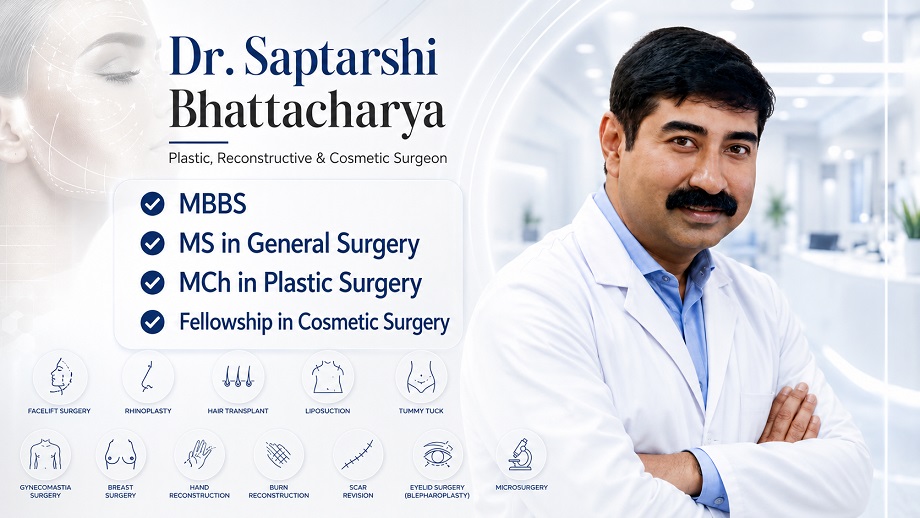
Dr. Saptarshi Bhattacharya’s published professional profiles list qualifications including MBBS, MS in General Surgery and MCh in Plastic Surgery. Apollo Hospitals also lists him within its Plastic & Cosmetic Surgery clinical team.
Relevant Experience
Experience with the particular procedure you are considering is worth discussing during consultation.
A surgeon who performs different types of cosmetic and reconstructive procedures can assess your specific concern and explain the available options.
Hospital and Surgical Facilities
Patients should understand where surgery will take place and what facilities are available for anaesthesia, monitoring, recovery and emergency care.
Transparent Consultation
A proper consultation should include a discussion about:
- The proposed procedure
- Benefits
- Limitations
- Risks
- Recovery
- Scarring
- Expected results
- Follow-up requirements
Patients should feel comfortable asking questions before making a decision.
Why Personalised Treatment Matters
Plastic surgery is not a one-size-fits-all treatment.
Two people may request the same procedure but require different surgical approaches because their anatomy, skin quality, proportions and expectations differ.
For example, body-contouring surgery may need to be planned differently depending on the amount of excess skin and tissue. Similarly, facial surgery needs to account for individual facial proportions.
Personalised planning can therefore be an important part of achieving an appropriate surgical outcome.
Preparing for Plastic Surgery
Good preparation can help patients understand what to expect before and after surgery.
Before the procedure, your surgeon may advise you about:
- Medical investigations
- Existing medications
- Smoking and alcohol
- Diet and hydration
- Activity restrictions
- Arrangements for transportation
- Post-operative support
- Recovery time
- Follow-up appointments
Patients should provide their surgeon with complete and accurate medical information.
Do not stop prescription medication unless specifically instructed by your doctor.
What Is Recovery Like?
Recovery varies considerably according to the procedure.
A smaller operation may have a relatively shorter recovery period, whereas extensive reconstructive or body-contouring surgery may require more time.
Recovery may involve:
- Swelling
- Bruising
- Temporary discomfort
- Dressing or wound care
- Activity restrictions
- Follow-up visits
- Gradual return to normal activities
Your surgeon will provide procedure-specific instructions regarding wound care, medication, exercise and follow-up.
Understanding Surgical Risks
Every surgical procedure has potential risks.
Depending on the operation, these may include:
- Bleeding
- Infection
- Swelling
- Bruising
- Scarring
- Changes in sensation
- Wound-healing problems
- Asymmetry
- Anaesthesia-related complications
- Need for additional treatment
The risks vary depending on the procedure and individual patient.
A consultation should include an explanation of the risks that are specifically relevant to your planned surgery.
How to Research a Plastic Surgeon Online
The internet provides access to a large amount of information, but patients should evaluate online information carefully.
When researching plastic surgery, look for:
- Specialist qualifications
- Relevant surgical training
- Hospital affiliations
- Procedures offered
- Professional experience
- Patient consultation process
- Safety information
- Clear explanation of risks and recovery
Third-party profiles can provide useful background information. For example, current online listings also identify Dr. Saptarshi Bhattacharya as a plastic surgeon in Kolkata and list his MBBS, MS General Surgery and MCh Plastic Surgery qualifications.
However, online profiles should complement—not replace—a direct consultation with a qualified medical professional.
Questions to Ask Before Plastic Surgery
Before agreeing to surgery, consider asking:
- Am I a suitable candidate?
- What alternatives are available?
- What technique do you recommend and why?
- Where will the surgery be performed?
- What type of anaesthesia will be used?
- What are the possible complications?
- Where will the scars be?
- How long will recovery take?
- When can I return to work?
- When can I resume exercise?
- What follow-up care will I need?
Taking notes during consultation can help you compare information and make a more informed decision.
Choosing the Right Plastic Surgery Clinic in Kolkata
The surgeon is important, but the overall surgical environment also matters.
Patients should understand where their procedure will be performed and whether appropriate facilities are available.
For example, Apollo Multispeciality Hospitals in Kolkata describes its Plastic Surgery department as having specialised operation theatres and dedicated recuperation areas.
Patients should always discuss the specific surgical facility and arrangements with their treating surgeon.
Why Realistic Expectations Matter
Plastic surgery can produce meaningful changes, but no responsible surgeon should guarantee an identical result for every patient.
Healing varies between individuals.
Factors that can influence results include:
- Age
- Skin quality
- General health
- Lifestyle
- Weight fluctuations
- Healing response
- Surgical technique
- Post-operative care
A good consultation should focus on realistic and achievable goals rather than unrealistic promises.
Finding the Best Plastic Surgeon for Your Needs
Searching for the best plastic surgeon in Kolkata is often the first step patients take when researching treatment.
However, the word “best” is subjective.
Instead of relying only on rankings or advertisements, consider whether the surgeon has appropriate specialist qualifications, relevant experience, suitable hospital facilities and a consultation process that allows you to understand the procedure properly.
For patients researching Dr. Saptarshi Bhattacharya, his dedicated profile provides information about his plastic surgery practice, qualifications and areas of treatment. You can learn more through the best plastic surgeon in Kolkata page.
Final Thoughts
Plastic surgery can involve cosmetic enhancement, reconstruction after injury, restoration of function, scar management and body contouring.
For anyone researching plastic surgery procedures in Kolkata, the most important step is to understand that treatment should be individually planned.
Research the procedure, check the surgeon’s specialist qualifications, understand the potential risks and recovery, and have a detailed consultation before making a decision.
The goal should always be an informed treatment choice based on individual needs, realistic expectations and patient safety.
 Users Today : 14
 Users Yesterday : 21
 Users Last 30 days : 688
 Users This Year : 6466
 Total Users : 44050
 Views Last 30 days : 1228
 Total views : 102095
 Who's Online : 0