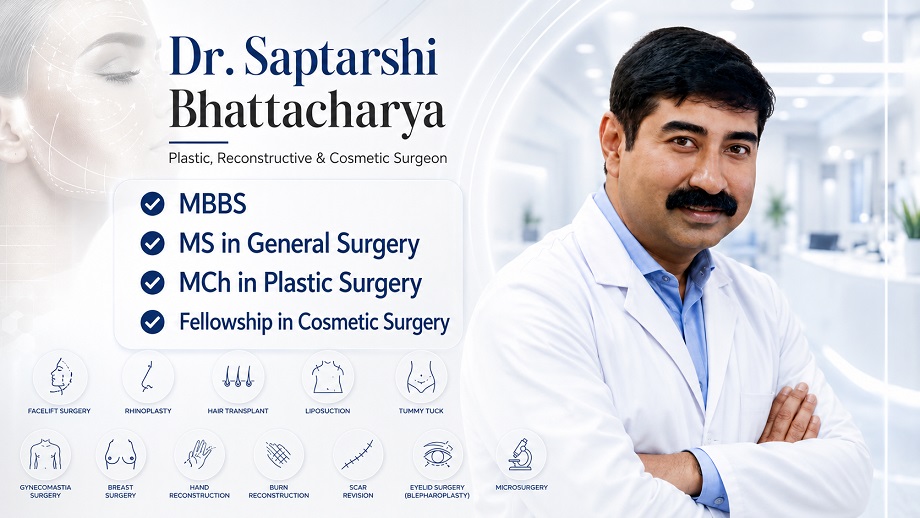
Plastic surgery is a specialised field that includes both cosmetic procedures and reconstructive treatments. While cosmetic surgery focuses primarily on improving specific aspects of appearance, reconstructive surgery may help restore form and function after injuries, burns, congenital conditions, cancer treatment, or other medical problems.
For patients considering plastic surgery in Kolkata, understanding the difference between these treatments and knowing how to choose an appropriately qualified surgeon can make the decision-making process easier.
What Does a Plastic Surgeon Do?
A plastic surgeon may perform procedures involving the face, breasts, body, skin, hands, limbs, and other areas.
Depending on the patient’s condition and goals, treatment may be cosmetic, reconstructive, or a combination of both.
Common areas of plastic surgery include:
- Facial aesthetic surgery
- Breast surgery
- Body contouring
- Rhinoplasty
- Eyelid surgery
- Gynecomastia surgery
- Liposuction
- Tummy tuck
- Scar revision
- Burn reconstruction
- Hand surgery
- Skin grafting
- Reconstruction after trauma
The most appropriate procedure depends on the patient’s medical history, anatomy, expectations, and overall health.
Cosmetic Plastic Surgery
Cosmetic surgery is generally performed to improve or enhance a particular physical feature.
Facial Procedures
Facial aesthetic procedures may include rhinoplasty, facelift surgery, eyelid surgery, scar revision, and other procedures designed around the patient’s specific concerns.
Breast Procedures
Plastic surgeons may perform breast augmentation, breast reduction, breast lift, gynecomastia surgery, and breast reconstruction.
Body Contouring
Body-contouring procedures may include liposuction, tummy tuck surgery, and other treatments designed to improve body shape and proportion.
Cosmetic surgery should always involve realistic expectations. The objective is not necessarily to create a completely different appearance, but to address a specific concern in an appropriate and proportionate manner.
Reconstructive Plastic Surgery
Reconstructive surgery has a different purpose.
It may be required after:
- Accidents
- Burns
- Traumatic injuries
- Cancer surgery
- Significant scarring
- Congenital conditions
- Tissue loss
- Certain hand or limb injuries
The goal may be to restore function as well as appearance.
Reconstructive surgery can require complex planning because the surgeon may need to consider skin, soft tissue, nerves, tendons, blood supply, and underlying structures.
How to Choose a Plastic Surgeon in Kolkata
Choosing a surgeon should involve more than searching for a highly ranked name online.
Consider the following factors before making a decision.
1. Specialist Qualifications
Review the surgeon’s medical qualifications and specialist training.
For example, Dr. Saptarshi Bhattacharya’s published profile lists MS, MRCS (England), and MCh in Plastic Surgery from PGIMER, Chandigarh, along with a visiting fellowship in cosmetic surgery in Brazil.
2. Relevant Surgical Experience
Experience should be considered in relation to the procedure you are interested in.
A surgeon may have extensive experience across several areas of plastic surgery, but your consultation should focus specifically on the procedure or condition you want treated.
3. Range of Expertise
A plastic surgeon with experience across cosmetic and reconstructive procedures may be able to assess different treatment options depending on the patient’s needs.
Dr. Bhattacharya’s published areas of practice include facial cosmetic surgery, breast surgery, body contouring, burn reconstruction, scar management, hand surgery, trauma reconstruction, and selected congenital deformities.
4. Personalised Treatment Planning
Every patient is different.
The same procedure may need to be approached differently depending on anatomy, age, skin quality, medical history, previous operations, and individual goals.
A personalised consultation helps determine whether surgery is appropriate and which approach may be suitable.
Why Consultation Matters
Online research is useful for understanding procedures, but it cannot replace an individual clinical assessment.
During a consultation, the surgeon may discuss:
- Your primary concern
- Medical history
- Previous surgeries
- Current medications
- Treatment options
- Expected results
- Surgical risks
- Recovery time
- Follow-up care
This gives you an opportunity to make an informed decision before undergoing treatment.
What Makes a Good Surgical Consultation?
A good consultation should be a two-way conversation.
Patients should feel comfortable asking questions about the procedure and expressing their expectations.
You can ask:
- Why is this procedure recommended?
- Are there alternatives?
- What results are realistic?
- What are the potential risks?
- How long will recovery take?
- Where will scars be located?
- What follow-up care is required?
- Could additional surgery become necessary?
Clear communication is an important part of informed consent.
Understanding Risks and Recovery
Plastic surgery is still surgery, and every operation carries potential risks.
Depending on the procedure, complications may include:
- Infection
- Bleeding
- Swelling
- Scarring
- Changes in sensation
- Asymmetry
- Delayed wound healing
- Anaesthesia-related complications
- Unsatisfactory results
- Need for revision surgery
Recovery also varies significantly. A minor procedure may require less downtime, while more extensive surgery can require several weeks of recovery.
Your surgeon should provide procedure-specific instructions.
Natural-Looking Results and Realistic Expectations
Aesthetic surgery should be approached with realistic expectations.
The final result can be influenced by factors such as:
- Individual anatomy
- Skin characteristics
- Healing response
- Age
- Lifestyle
- Medical conditions
- Surgical technique
- Post-operative care
Dr. Bhattacharya’s published approach emphasises individualised planning, patient safety, and balanced, natural-looking results.
However, no surgeon can guarantee an identical outcome for every patient.
Choosing a Plastic Surgery Specialist in Kolkata
When researching a plastic surgeon in Kolkata, patients should consider the complete picture rather than relying on one factor.
Look at:
Qualifications: Is the surgeon appropriately trained?
Experience: Does the surgeon have relevant experience with the procedure?
Approach: Is treatment planned around your individual needs?
Communication: Are risks and realistic outcomes clearly explained?
Facilities: Is the procedure performed in an appropriate medical setting?
Follow-up: Is adequate post-operative care available?
These considerations can help patients make a more informed choice.
Dr. Saptarshi Bhattacharya
Dr. Saptarshi Bhattacharya’s published profile states that he has more than 20 years of surgical experience and qualifications including MS, MRCS (England), and MCh in Plastic Surgery from PGIMER, Chandigarh. His profile also lists international cosmetic surgery fellowship experience in Brazil.
His listed areas of practice include cosmetic and reconstructive procedures involving the face, breasts, body, scars, burns, hands, and trauma.
Patients considering treatment should undergo an individual consultation to determine whether a particular procedure is appropriate for their circumstances.
For more information, you can explore this detailed guide to the best plastic surgeon in Kolkata.
Final Thoughts
Plastic surgery encompasses much more than cosmetic enhancement. It can involve aesthetic procedures designed to improve appearance as well as reconstructive surgery intended to restore form and function.
If you are considering plastic surgery in Kolkata, take time to research the surgeon’s qualifications, relevant experience, treatment approach, safety standards, and follow-up care.
Most importantly, arrange a professional consultation before making a decision. A personalised assessment can help you understand your options, potential risks, recovery requirements, and realistic expectations.
 Users Today : 14
 Users Yesterday : 21
 Users Last 30 days : 688
 Users This Year : 6466
 Total Users : 44050
 Views Last 30 days : 1228
 Total views : 102095
 Who's Online : 0